Seven SWMs, Seven Photographers, Seven Days in Iceland Behind the Brand Visual Campaign
Iceland doesn’t cooperate with production schedules. The weather changes every twenty minutes, the light swings from golden-hour brilliance to flat gray in the time it takes to swap a lens, and the terrain alternates between black volcanic sand, moss-covered lava fields, and glacial rivers that can rise half a meter without warning. Planning a commercial photo shoot here requires either supreme confidence or a willingness to embrace chaos. The 1000 cc atv brand team chose the latter — and the resulting visual campaign became one of the most talked-about pieces of 2026 powersports brand content. Seven photographers, seven SWM vehicles, and seven days of Icelandic weather taught us something about visual storytelling that you can’t learn in a studio.
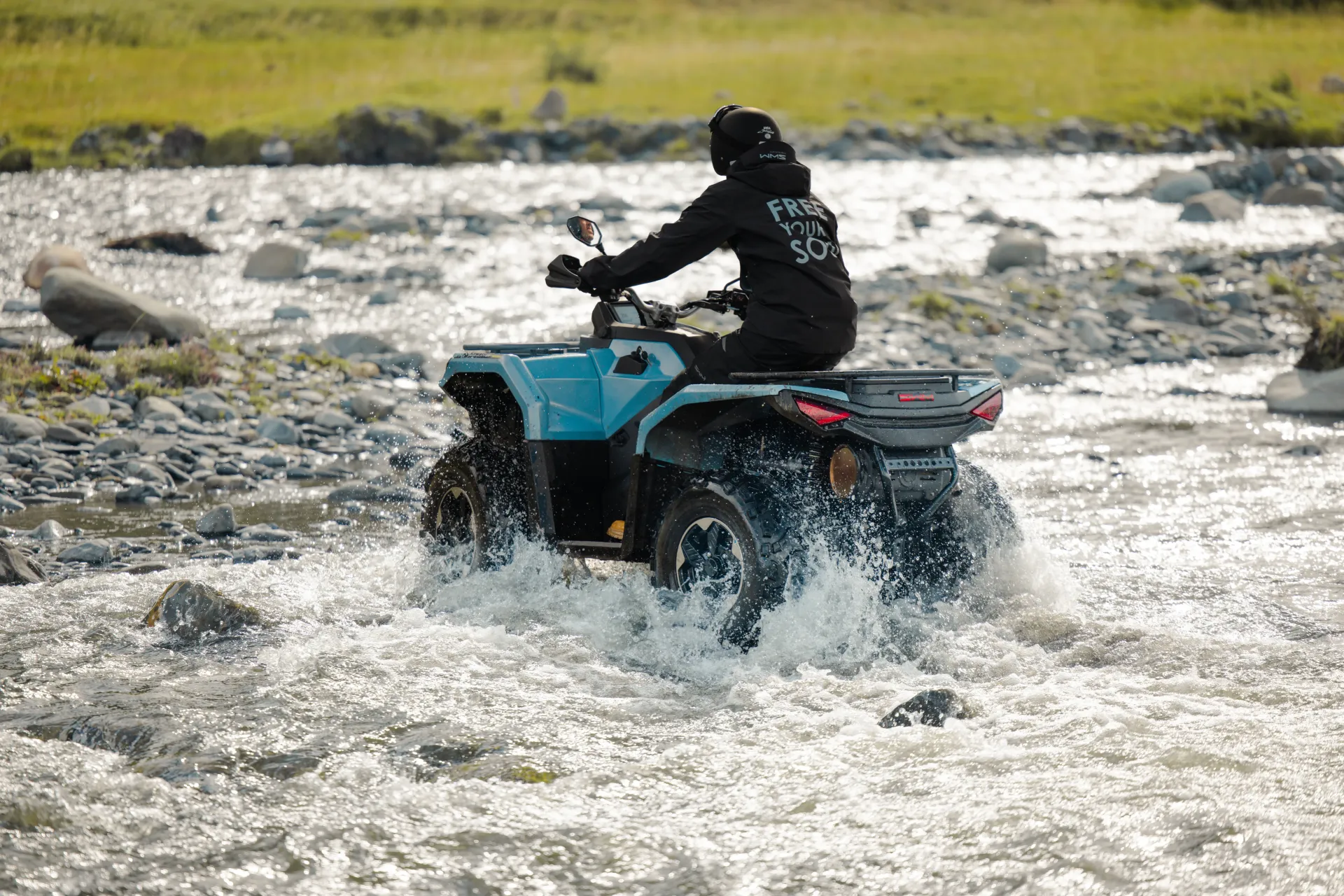
The creative brief was unconventional: no studio lighting, no composited backgrounds, no artificially enhanced vehicle positioning. Every image had to capture an SWM vehicle in actual operation — crossing a glacial ford, climbing a volcanic scree slope, silhouetted against the aurora, parked beside a geothermal hot spring with steam rising around the tires. The fleet consisted of two Trailhunter 1000s, three Nomader 850s, one Nomader Hybrid Pro, and one Trailhunter 580 — a deliberately mixed lineup that allowed the photographers to capture the brand’s full product range in a coherent visual language.
Dr Mensah: “The brief said ‘capture the Icelandic landscape as a character, not a backdrop.’ That changes everything about how you approach the shoot. You’re not finding a pretty spot and parking the vehicle in front of it. You’re looking for moments where the vehicle and the environment interact — spray from a river crossing, dust from a gravel trail, steam from a hot spring wrapping around the chassis.”
Ms Petrova: “Day three, we were shooting at Jökulsárlón glacier lagoon. The Nomader Hybrid Pro in electric mode was essential — the silence meant we could position it within meters of seals hauled out on the ice without disturbing them. That kind of shot, with wildlife in the foreground and the vehicle in the mid-ground, is simply impossible with a combustion engine. The hybrid isn’t just a performance feature; it’s a creative tool.”

The technical challenges were constant. Black sand beaches — stunning on camera — are an abrasive nightmare for equipment. Lenses needed cleaning every 45 minutes. Drone batteries, rated for 25 minutes of flight time, lasted barely 15 in the near-freezing coastal winds. The Trailhunter 1000s served double duty as camera platforms and subject vehicles, with one photographer (Captain O’Brien) mounting a gimbal rig to the front rack for dynamic tracking shots of the Nomaders in motion. The most difficult shot of the entire week — a low-angle image of a Nomader 850 splashing through a glacial river with the Vatnajökull ice cap in the background — required twelve attempts across two separate locations before the light, the water height, and the vehicle positioning all aligned.
The campaign’s post-production philosophy was as disciplined as the shoot itself. Color grading was limited to matching the natural palette that Iceland already provides — deep volcanic blacks, electric moss greens, and the particular quality of Arctic light that no filter can truly replicate. Vehicle dirt and water marks were intentionally preserved. The creative director’s instruction was simple: ‘If it looks like it could be from a dealership brochure, delete it. If it looks like a moment that actually happened, keep it.’ The resulting image library — approximately 4,800 final selects from over 40,000 frames — has become the visual foundation for SWM’s 2026-2027 global brand campaigns. The lesson for brands considering similar productions: authenticity doesn’t come from what you add in post. It comes from what you’re willing to put the vehicles through during the shoot.
The creative brief for the Iceland campaign was unusual in the powersports industry: no studio lighting, no composited backgrounds, no post-production that would alter the vehicle’s appearance or the terrain’s character. Every image had to be captured in-camera, in the moment, with the vehicle genuinely operating in the environment depicted. This commitment to authenticity introduced production complexities that a conventional automotive photography team would never accept — shooting windows measured in minutes rather than hours as Icelandic weather fronts swept through, vehicles caked in genuine volcanic mud rather than art-department dirt, photographers lying in glacial runoff to get low-angle tracking shots. The resulting image library contains over 14,000 raw frames, of which approximately 200 were selected for the final campaign. The selection criterion was not technical perfection — several of the most powerful images have lens flare, motion blur, or dust on the sensor that would be grounds for rejection in a typical automotive shoot. The criterion was emotional authenticity: does this image make the viewer feel cold, or fast, or exhilarated, or awestruck? The 1000 cc atv shots from the glacial lagoon sequence, where the Trailhunter navigates through floating ice chunks in waist-deep water with the Vatnajökull ice cap in the background, required seventeen takes over two days to capture the single frame that became the campaign’s hero image. The photographer described it as the most logistically difficult shoot of a twenty-five-year career, and also the most rewarding.