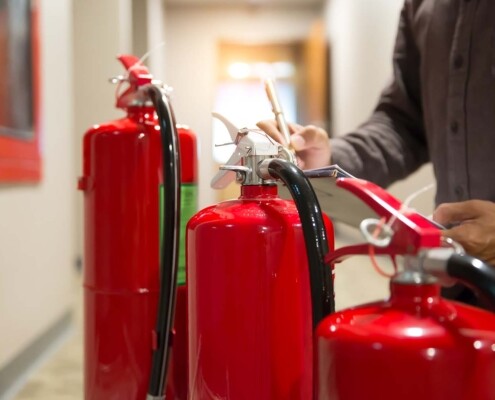
20 FREE PIECES OF ADVICE FOR PICKING FIRE SAFETY IN WORCESTER
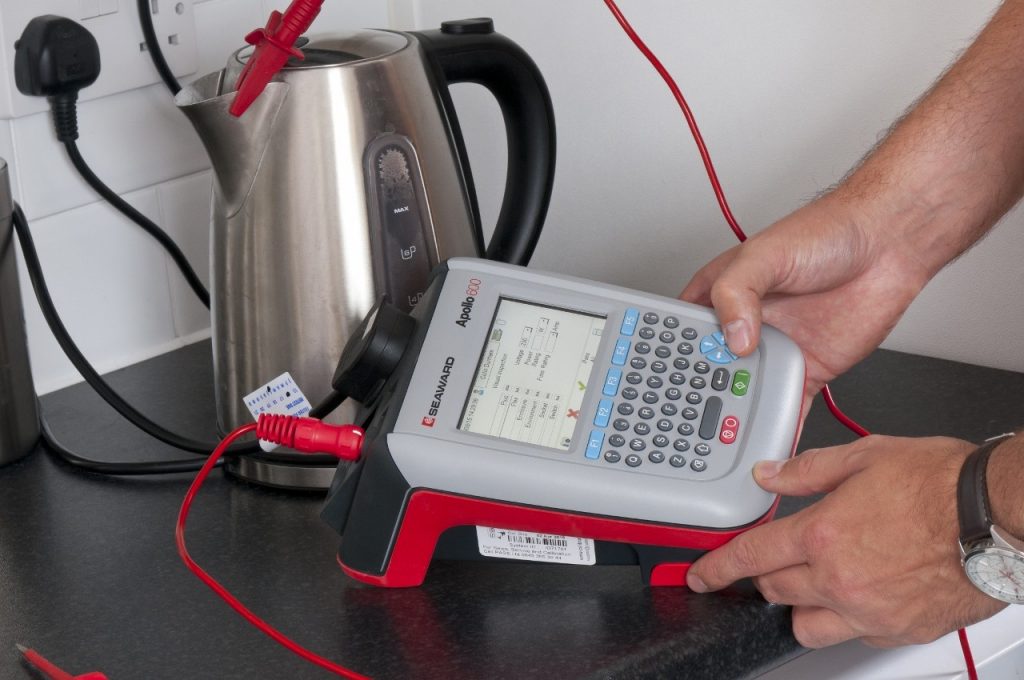
Top 10 Tips On Assessing Compliance With The Regulatory Requirements Of PAT in Worcester
The UK regulatory framework for Portable Appliance Testing is fundamentally distinct from that of fixed electrical installations and fire safety equipment. Unlike fire extinguisher servicing, which operates under specific British Standards and third-party certification schemes, PAT testing is governed by a broader health and safety framework that emphasizes risk assessment and duty of care rather than mandatory periodic testing schedules. Electricity at Work Regulations (1989) state that electrical systems, including portable equipment, must be regularly maintained to avoid harm. The Regulations don't specify the method or frequency of testing, nor how to achieve this maintenance. As a result, the employer is required to perform an adequate and appropriate risk assessment before determining a maintenance and testing regime. Compliance is therefore not only demonstrated by test certificates, but also by a process of risk-based decisions, competent implementation and thorough documentation which proves an organized approach to electrical safety at the workplace.
1. Electricity at Work Regulations of 1989
Regulation 4(2), of the Electricity at Work Regulations, 1989, is the cornerstone for PAT compliance. It states: "As necessary to prevent dangers, all systems must be maintained to prevent such dangers, as far as it is reasonably practicable." The duty to maintain electrical equipment is a legal obligation for employers and other dutyholders. The term system includes portable appliances. Importantly, the regulations do NOT mention "PAT Testing"; they mandate "Maintenance," an encompassing concept which includes visual inspections, user checks, combined inspection and testing, as well as a wider concept of maintenance. The risk assessment determines the frequency and type required of maintenance, not a set legal schedule.
2. Act 1974 on Health and Safety at Work Act 1974
The Health and Safety at Work Act 1974 is the main legislation that establishes employers' general duties towards employees and others. The 1974 Act is the main legislation which establishes employers' general duties towards their employees and other people. According to Section 2 of this Act, employers must ensure that all employees are safe and healthy, in the best way possible. Electrical equipment is included in the safe operation of electrical systems and plant. In Section 3, this duty extends to those not under their employment such as visitors and contractors. The PAT test process is one of the most effective ways to meet these duties. It provides a systematic approach for ensuring electrical safety.
3. Guidance and Best Practice: The IET Code of Practice for In-Service Inspection and Testing of Electrical Equipment
While not law itself, the Institution of Engineering and Technology (IET) Code of Practice is the universally accepted benchmark for best practice in PAT testing. It offers detailed advice on how to create a maintenance regime that is compliant.
Definitions of appliance classes, types and categories
Details procedures for formal inspections of the product and inspections with testing.
The equipment type, operating environment and recommended inspection and test frequencies will determine the initial frequency.
Criteria for determining whether a test result is a pass or a fail
Courts and Health and Safety Executives (HSE) inspectors use this code as a standard to judge the suitability and sufficiency of a dutyholder’s routine maintenance. If there is no documented, robust reason for a deviation from the code, it can be considered a violation of the general regulations.
4. Risk Assessment: The Priority of Risk Assessment
HSE promotes a risk-based PAT approach, moving away the outdated concept that all equipment should be tested annually. Dutyholders must perform a risk analysis to determine the frequency, type, and need for inspection and testing. A number of factors will influence the assessment.
Equipment type. In a low risk environment, a double-insulated appliance (Class II) may only require visual checks. But a class I appliance in an industrial workshop may require formal testing on a regular basis.
Environment: Construction sites and warehouses are high-risk environments. Offices and hotels are generally lower risk.
Users: Is the person using equipment a member of your staff?
Previous history: Is the appliance new or frequently damaged?
This risk assessment defines a conforming system and not by the number of tests that have been conducted.
5. The Concept of Competence for Testers
Regulation 16 of 1989's Electricity at Work Regulations requires that those who work with electrical systems have the technical knowledge and expertise to prevent danger. In PAT tests, "competence", does not always require formal qualification. However, the tester must possess:
Electrical knowledge is important.
The ability to work with the system in question and have an understanding of it.
Understanding of the hazards and precautions required.
Ability to use test equipment correctly and interpret results.
City & Guilds2377 is a popular qualification which provides excellent training. However competence can be obtained through alternative means. The dutyholder must be able to demonstrate that the person conducting the testing is competent.
6. Documentation requirements and record keeping
The Electricity at Work Regulations does not require that records be kept. Regulation 29 says that it's a defense to prove you did everything possible and took due diligence in order to avoid the offence. Comprehensive records are the primary evidence of due diligence. A compliant system of record-keeping should include the following:
An asset register of equipment.
Record of the risk assessment, and the maintenance plan that results.
Reports detailing each formal inspection or test. Includes appliance description, test result, pass/fail, next test date, and tester identity.
The HSE or local authorities must have easy access to these records.
7. Labelling and identification of appliances
Labelling is an important part of a PAT system that's compliant. Each appliance which has undergone an official combined inspection/test should be labelled:
Unique asset identification number. This identifies the asset and its record.
The date the test was conducted.
Date for next test (or inspection).
The name or identifier used to identify the tester.
Labels are a visual indicator for both users and inspectors of the appliance's status. Labels must be durable, nonmetallic and nonconductive.
8. The HSE's Enforcement stance and "Myth-Busting"
The HSE is actively working to dispel misconceptions surrounding PAT tests. They stress that:
There is no legal requirement to have an annual test for all equipment.
Businesses can conduct their own testing if they have competent staff; there is no legal requirement to use a third-party contractor.
Visual inspections can be used to identify many faults and are more reliable than electronic tests.
An enforcement official will consider a risk-based strategy. An enforcement officer may view a company less favorably if it tests all equipment blindly every year, without supporting risk assessments.
9. PUWER: 1998 – Interaction with other Legislation
The Provision and Use of Work Equipment Regulations of the year 1998 (PUWER), apply also to portable appliances. PUWER stipulates that equipment must be fit for its intended purpose, in a safe condition, and inspected regularly to ensure safety. Regulation 6 specifically requires inspections where safety is dependent on installation conditions. PAT tests are a crucial method to meet PUWER's requirements for inspections and maintenance of electrical work equipment.
10. Insurance implications and due diligence
While the law is based on risk assessment, insurance companies may have specific requirements. The policy may stipulate that the PAT test is performed annually by a reputable third party. Unable to comply with this requirement could invalidate your claim. Furthermore, in the event of an electrical incident, the dutyholder's PAT testing records and risk assessment will be the first documents scrutinized by insurers and HSE investigators. A well-documented, risk-based system is the strongest possible evidence of due diligence and a robust defence against prosecution or a invalidated insurance claim. Follow the top rated EICR inspections in Worcester for blog advice including all about fire extinguisher, fire extinguisher for electrical fire, a fire extinguisher, a fire extinguisher, fire extinguisher for electrical fire, fire extinguisher testing, fire extinguisher using, fire extinguisher inspections, fire service fire extinguisher, all about fire extinguisher and more..
Top 10 Tips For Cost Transparency Of The Fire Extinguisher Services in Worcester
In order to achieve cost transparency the fire extinguisher provider must consider risk management and regulatory compliance. This is not just about price comparison. Occurate pricing can hide significant compliance concerns and result in unforeseen liability within the UK's tight regulatory framework governed under the Regulatory Reform Order for Fire Safety 2005. A clear quotation is a detailed blueprint of the services you'll receive, directly reflecting the company's compliance with British Standards, their operational procedure, and their commitment to ethical business practices. Unknown costs, unclear products and unclear replacement policies could be a significant issue, not just financially, but could also be a sign of a loss in quality of service. Transparency in costs is essential for an informed decision to be taken that is in line with budgetary constraints with the demands of the law on fire.
1. Breakdown of Costs for Service Visits including labour, parts and Consumables in Worcester
The price of each kind of service will be outlined in a straightforward estimate. An estimate for a regular service must separate out the labour costs of the engineer (his time on the job) as well as the replacement parts (e.g. new seals and labels) and the consumables. This breakdown proves the provider's commitment to quality by not using old equipment or using old sealings. It permits fair comparison between providers as a lower price may not include these crucial elements, making it inaccurate.
2. Pricing Model Clarity: All-Inclusive vs. Pay-As-You-Go
The price must clearly indicate the pricing model that is used. Fixed-Price (or All-Inclusive) Contract will be based on one annual fee that covers all the services, parts and labour. There shouldn't be charges hidden for five-year or 10-year agreements. The Time-and- Materials model or Pay As You Go will have a lower service fee at first but then will increase it significantly when additional services become due. Transparency will aid you in avoiding financial shocks in the future and help you understand the real financial risk.
3. Extended Service (5 & 10 Year) Cost Estimation
The biggest cost shocks happen when services that are extended are due. Transparent companies will not hide the future costs. They will provide in their quote a detailed price list that outlines the estimated cost for 5-year extended services (for powder or water foam) along with 10 years of inspections and CO2 pressure test for each extinguisher type. You can plan your budget for the entire contract period and then compare the cost of an all inclusive package against a pay-as-you go model.
4. The policy for replacement of equipment and condemnation in Worcester
Transparency is essential here. The quote should contain the policies of the provider as well as expenses associated with replacement of extinguishers that are beyond repair (BER). This can include scenarios such as major damage, corrosion, or outdated models. Will they provide a replacement that is similar? What is the cost? What's the cost? Lack of clarity suggests that the service provider could make use of equipment condemnation as an opportunity to impose unanticipatedly high replacement costs and hold your compliance hostage.
5. Other and Hidden Fee Disclosure Call-Out, Mileage Admin in Worcester
Make sure to check the fine print of your quote. A reputable company will list these upfront. It is possible to be able to identify the following details: Mileage (after a certain amount of distance), Emergency Call Out charges (and the cost outside normal business hours) and Administrative Fees (for processing certificates or documents) and parking/congestion charges (particularly for Worcesters within city centers). If a quote seems to be too low the reason could be due to the fact that the cost is not included.
6. Quote Validation Period and Price Guarantee Terms in Worcester
Professional quotes will clearly define the time frame for validity (30-90 days is common) that protects you from any price increases that may occur after you decide to sign the contract. When it comes to contracts that are longer-term, it is also important to mention any conditions of a price guarantee. The annual cost for the term of the contract be fixed? Does the annual fee rise in accordance with an index, such as CPI? Or will it be reviewed every year by the provider at their discretion? Transparent contract terms reduce disputes and provide budget certainty.
7. Different Pricing by Type and Size of Extinguisher in Worcester
The cost of service can be wildly different dependent on the size and type of extinguisher. Transparent quotes will not have a blanket price. It will provide you with the price per unit. For example it could distinguish between a CO2 extinguisher that weighs 2kg and wet chemical units that weighs 6 litres. This is an honest and accurate assessment of the inventory you have and the tasks that need to be completed instead of an general estimate which may overcharge simple units.
8. Costs for documentation and certification in Worcester
It is mandatory to provide a certificate of conformity. To include the cost of producing and distributing this essential document in the service charge it must be listed. Transparent quotes do not include this line item as a fee or include it on the final statement. If a provider does charge extra for the very proof that the work was completed in a legal manner, it's a major warning signal of poor business practices.
9. Payment Terms Schedule in Worcester
The payment terms must be simple and reasonable. This is a sign of a reliable supplier. The quote should state the frequency of the invoice (e.g. annual, quarterly or quarterly), the payment methods accepted, as well as the terms of payment net (e.g. 30 days from invoice date). It is essential to determine if you have to pay in advance for the service or when the service is finished. Do not choose providers that require full upfront payment for an annual agreement prior to any service is provided.
10. Comparison Framework to Evaluate Quotes that are Competing in Worcester
Finally, transparency lets users to compare different products. A vague quote makes this impossible. The providers should provide a detailed itemized breakdown so that you can evaluate the cost of maintaining a CO2 extinguisher weighing 2kg with Company A and Company B. The breakdown should include the price for the annual service, along with the estimated cost to test the CO2 extinguisher over 10 years, and the replacement cost. If you don't provide this information, you'll be comparing apples with oranges. The cheapest initial estimate might end up costing the most over the long term, compromising the safety and conformity. Have a look at the best fire extinguisher inspection in Worcester for website info including fire extinguisher for an electrical fire, fire extinguisher service Worcester, fire extinguisher, fire extinguisher company, fire extinguisher service near me, electrical extinguisher, fire extinguisher for an electrical fire, a fire extinguisher, fire extinguisher service near me, fire extinguisher fire and more. More broadly, read the top rated electrical testing for more.